Monday, January 27, 2014
Reflection 1-27-14
Last week we continued to read Oedipus Rex and talk about our Tragic Hero project. My group for the Tragic Hero project will probably be doing the movie Into the Wild. Into the Wild is about a man who is kicked out of society and decides to hike from Atlanta to Alaska, where (spoiler alert) he is later found dead. This is the perfect tragic hero movie because he starts as a smart college grad, then finishes as a nobody who didn't live a "full" life. I have now finished Oedipus Rex and realized just how tragic Oedipus and his Hubris truly is. His pride and arrogance lead to his emanate downfall and demise. He loses himself mentally and stabs his own eyes out due to his grief, regret, and confusion. He discovers that he committed the murder that cursed his kingdom and married and had children with his own mother. The final line says how he could no longer bear the pain of a mortal and passed on mortality. That is a quick summary of what I learned/read last week.

Monday, January 20, 2014
Reflection 1-20-14
So far this semester, I have learned about two new things; silent films and Greek theater. I was surprised by the silent film Baraka as I didn't previously believe that a film with no dialogue could connect to me at all. I was completely wrong however. The film showed moving images that I never would have know existed if not for Baraka. Although we have only just begun Oedipus Rex, I can tell that it is full of irony and symbolism that I am always keen to learn about. One specific thing I have learned so far from Oedipus Rex is the idea of Dramatic Irony. Once I learned what it was, it has become hard to watch any scripted film or TV show without recognizing it. It has been a good couple first weeks and I am looking forward to the many coming.


Thursday, January 16, 2014
Oedipus Rex Inventory 1-16-14
Oedipus Rex: Man, Play, and Myth.
Man: Oedipus Rex as man, or as a king, was very powerful and most likely just as impulsive. The moment he discovers a curse put upon him and his kingdom, he sets out to lift it; ignoring all morality and killing many. Oedipus is also very proud and confident. This makes him a good leader at first, but eventually leads to his downfall. For example, after he saves Thebes, he exclaims how everyone will know his fame and love him.
 Play: The play as a whole is defined as a Greek Tragedy. It tells the story of a king who must save his town from a curse, only to find sorrow on his path. Other characteristics of this play include the ability to recognize hard emotions in the characters (ie: sorrow, sadness, anger, etc.) and to evoke thoughts of humanity in the readers/viewers. The play, different from the myth, takes place with Oedipus as an adult and his life as king.
 Myth: The myth of Oedipus Rex was written before the play, and is a slightly different story. In the myth, it tells the story of Oedipus before adulthood/kingship. It explains how the oracle of Delphi came to him as a child and said how Oedipus would kill his father and marry his mother. Most people knew the myth before seeing the play.
 Aristotle: tragedy and hubris.
Tragedy: Aristotle actually created a formula for a perfect tragedy, and describes Oedipus Rex as one. He says, "a tragedy must be an imitation of life in the form of a serious story that is complete in itself." Oedipus Rex most definitely has an imitation of realism and is very serious and complete. His theory of tragedy goes like this: plot, character, thought, diction, song, spectacle, and cleansing. (In that order.)
 Hubris: Aristotle's literary device of Hubris is defined by him as, “...doing and saying things that cause shame to the
victim…simply for the pleasure of it. Retaliation is not hubris, but
revenge. … Young men and the rich are hubris-tic because they think they
are better than other people.” Oedipus expresses hubris by choosing not to recognize his problems, therefore putting those around him in danger.

Terms: dramatic irony, Sophocles, Tiresias, fate, and Greek theater.
Dramatic Irony: Dramtic irony is "(Theatre) theatre the irony occurring when the implications of a situation, speech, etc, are understood by the audience but not by the characters in the play." (Dictionary.com) It is used in Oedipus Rex when the audience understands that Oedipus really did kill his father, Laius, and is married to his mother, Jocasta. Oedipus is to arrogant to recognize these problems when the audience does, but that is a tool that Sophocles chose to use.
 Sophocles: Sophocles, the writer of the play Oedipus Rex, was a Greek play writer and Tragedian. He was born in Greece in 498 BCE and died in 406 BCE. He is most famous for his work with the Theban plays, Antigone, Oedipus the King, and Oedipus at Colonus.
 Tiresias: Tiresias was a blind prophet if Thebes, who in Oedipus Rex tells Oedipus the truth when Oedipus comes seeking answers about Laius. Oedipus refuses to listen to these truths and has him banished from the kingdom. Tiresias explains how he was once turned into a woman for seven years by killing a female snake as well. He appears in many other Greek myths as well.
 Fate: Fate, as it is defined, is the development of events beyond one's control. This idea of a set destiny was held very closely by the Greeks; particularly in their mythology. In Oedipus Rex, fate is given by an oracle, refused by the receiver, and inevitably followed through.

Greek Theater: Greek theater, always taking place in a large, open amphitheater in ancient times, has many formats and varieties. In tragedy however, the format goes like this: Prologue, Parode, Episode, Satsimon, and Exode. (In that order.) There are other types of greek theater, including comedy and satire. The Greeks used theater to express politics, entertainment, and human tragedy/myth for the most part.

Man: Oedipus Rex as man, or as a king, was very powerful and most likely just as impulsive. The moment he discovers a curse put upon him and his kingdom, he sets out to lift it; ignoring all morality and killing many. Oedipus is also very proud and confident. This makes him a good leader at first, but eventually leads to his downfall. For example, after he saves Thebes, he exclaims how everyone will know his fame and love him.
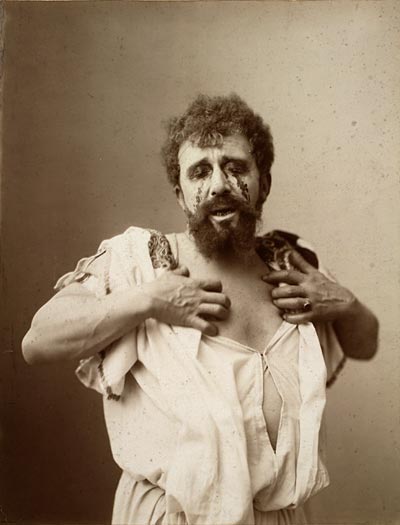

Tragedy: Aristotle actually created a formula for a perfect tragedy, and describes Oedipus Rex as one. He says, "a tragedy must be an imitation of life in the form of a serious story that is complete in itself." Oedipus Rex most definitely has an imitation of realism and is very serious and complete. His theory of tragedy goes like this: plot, character, thought, diction, song, spectacle, and cleansing. (In that order.)

Terms: dramatic irony, Sophocles, Tiresias, fate, and Greek theater.
Dramatic Irony: Dramtic irony is "(Theatre) theatre the irony occurring when the implications of a situation, speech, etc, are understood by the audience but not by the characters in the play." (Dictionary.com) It is used in Oedipus Rex when the audience understands that Oedipus really did kill his father, Laius, and is married to his mother, Jocasta. Oedipus is to arrogant to recognize these problems when the audience does, but that is a tool that Sophocles chose to use.

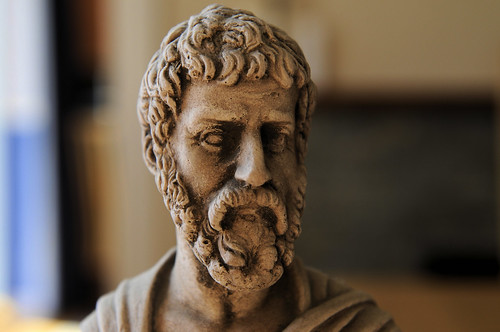


Greek Theater: Greek theater, always taking place in a large, open amphitheater in ancient times, has many formats and varieties. In tragedy however, the format goes like this: Prologue, Parode, Episode, Satsimon, and Exode. (In that order.) There are other types of greek theater, including comedy and satire. The Greeks used theater to express politics, entertainment, and human tragedy/myth for the most part.

Monday, January 13, 2014
Brick Wall 1/13/14
When someone thinks of a movie, generally the first thought that pops into mind is not something without words or any form of dialogue. However, the film Baraka, is just that. It contains only music and the brief sound of something on camera. A movie without discourage must be completely empty and boring right? Wrong. Baraka takes images from around the world and shows just how powerful image alone can be. It even relates to things learned in first semester, such as the Gaia theory in Lord of the Flies. The Gaia theory explains how all things are connected, just as Baraka shows the similarities that countries of all cultures have. For example, people of all religions have very similar rituals and practices. We also the connection of things like urban life leading to unhappiness and the tribal rituals of places that may be on opposite sides of the globe. Mary Anne Brussat talks of a compassion that travels throughout the world. We see "... the Buddhists in their temples, the Christians in their churches, the Jews at the Western Wall in Jerusalem, the Islamic believers in their mosques, and the Hindus along the sacred river Ganges." (Brussat 2). All of these religions worshiping different things in different places, yet still showing compassion and gratitude for something. Another example of a way that Baraka influences compassion onto its viewers is the images of the chickens going from egg to adult. These animals are brutally treated and thrown around like something that doesn't have a heart beat. Although no one in the scenes show it, compassion flows out of this part of the film by giving the viewers an up close look at what happens behind the scenes of our daily lives. One moment I found very thought-provoking that Brusset barely mentioned was the scene where a monk seems to be doing a sort of meditative walking through a very crowded urban street. Everyone simply walks around him, barely noticing him, while he appears to be focusing hard on his surroundings. Just one of the few moment in Baraka where two things contrast each other very sharply.
One of the most stunning features about this film was the way the music, sound, and camera views changed the way that everything appeared on screen. The music fit the mood of the scene, or rather set the mood of the scene. If the scene of mass producing chick-lets was played with a background of happy "carnival" music, it may have appeared funny or harmless at first glance. The same way that the camera captured close-up views of scared tribal children and old Hindu men watching carefully. In my case, finding the meaning of a film like this is very difficult, simply because I have the emotional range of a brick wall. However, I can see what Ron Fricke (the director) was trying to get across to his audience. It is clear that Fricke wants viewers to not only see the difference in cultures aorund the world, but to feel their struggles as well. I believe that the meaning of the whole thing is to not only sympathize with the less fortunate, but to help them. In conclusion, Baraka is a stunning work of visual masterpiece, an emotional look into the world, and an overall intriguing experience.

One of the most stunning features about this film was the way the music, sound, and camera views changed the way that everything appeared on screen. The music fit the mood of the scene, or rather set the mood of the scene. If the scene of mass producing chick-lets was played with a background of happy "carnival" music, it may have appeared funny or harmless at first glance. The same way that the camera captured close-up views of scared tribal children and old Hindu men watching carefully. In my case, finding the meaning of a film like this is very difficult, simply because I have the emotional range of a brick wall. However, I can see what Ron Fricke (the director) was trying to get across to his audience. It is clear that Fricke wants viewers to not only see the difference in cultures aorund the world, but to feel their struggles as well. I believe that the meaning of the whole thing is to not only sympathize with the less fortunate, but to help them. In conclusion, Baraka is a stunning work of visual masterpiece, an emotional look into the world, and an overall intriguing experience.

Monday, December 2, 2013
12-2-13 Post #13 Out of Order
At the end of William Golding's Lord of the Flies, the true savagery of human nature comes out in full form. In chapter ten, Piggy's ordered mindset pushes the boys to try and find a peaceful solution with the other group of boys to improve their chances of survival. This was a very good and mature idea, yet the boys cannot communicate with any sense of maturity. "The shivering, silvery, unreal laughter of the savages sprayed out and echoed away," (Golding 182). The boys who took Piggy's glasses are now not even referred to as boys, but as savages. Ralph and Piggy do their best to have a peaceful interaction, but cannot overcome the primal instincts of the boys that used to be. The interaction comes to a fatal end when Roger, one of the savages, pushes a rock of the cliff and onto Piggy. Crushing the only two objects left that symbolize any sense of order/civilization; Piggy and the Conch shell. In the next chapter, Ralph loses his small sense of order and decides to take revenge. He finds the Lord of the Flies, the real beast of the Island, and compares it to the conch, "...looked steadily at the skull that gleamed as white as ever the conch had done...," (Golding 190). The flies had eaten away all of the flesh of the sow head, revealing the shiny, pure underlying skull. Just like the boys grew a flesh of barbaric and flesh over their innocent skin. Yet, unlike the sow head, nothing was left to clean them; until the navy appeared. "The other little boys began to shake and sob too," (Golding 207). All it took was one adult to end a savage assault to cease instantly. Every boy on that island was involved in a violent assault just minutes earlier, yet now peace flooded the beach. The naval officer helped Ralph realize that the way they were acting was completely crazy according to their everyday lives, yet on the island, it seemed inevitable that the brutality would erupt. This goes to show how the smallest slip in order can lead to a total collapse, especially when immaturity flourishes among the culprits.


Monday, November 18, 2013
Journal 11-14-13
What symbols are emerging in the novel? How are they changing in meaning? Think of how much Piggy is changing, or the conch, island, etc.
In the beginning of the novel, Piggy was always very timid. He was afraid to speak his mind and never even considered standing out for himself. Now, through Chapter 5, he is beginning to grow a little confidence. He has no problem with giving his opinion, even if people turn him down instantly. At one point, Piggy even has an angry outburst towards Ralph. This shocks everyone, yet people still wont recognize that he is smart and should be listened to. People will not respect him yet he could be a very useful asset. One symbol emerging on the story is the beast, or snake-thing. This often-talked about object is a point of fear for the boys. Some say a monster lives on the island and is planning to attack, others don't believe it. The symbol is fear of the boys as well the distrust they have with each other. Only Simon seems to understand the atmosphere of the island.
In the beginning of the novel, Piggy was always very timid. He was afraid to speak his mind and never even considered standing out for himself. Now, through Chapter 5, he is beginning to grow a little confidence. He has no problem with giving his opinion, even if people turn him down instantly. At one point, Piggy even has an angry outburst towards Ralph. This shocks everyone, yet people still wont recognize that he is smart and should be listened to. People will not respect him yet he could be a very useful asset. One symbol emerging on the story is the beast, or snake-thing. This often-talked about object is a point of fear for the boys. Some say a monster lives on the island and is planning to attack, others don't believe it. The symbol is fear of the boys as well the distrust they have with each other. Only Simon seems to understand the atmosphere of the island.
Friday, November 8, 2013
Friday Free Write Part 1
Friday
free write.
A:
As a child, my family loved to camp. Each memorial day we
would travel to northern Michigan in our camper with some friends. I loved all
of it. The fresh air, the water, the campfires, everything. “Come on!” I yell
to my cousin as she gingerly tests the water with the built in thermometer that
everyone seems to have in their big toe. “Its too cold!” She replies. Finally
her brother comes up behind her and shoves her into the lake. She was too cold
to yell at him. At dinner each night we could laugh and joke about the events
of the day. We laughed about my mom’s phobia of frogs as we bragged about the size
of the frogs we had caught that day. One
Memorial Day, on our way home, something very unexpected happened. We were driving along the highway when the tire blew out on our very large and heavy camper...
Subscribe to:
Posts (Atom)